The Unpredictable Success of Planet of Lana: Turning Hundreds of Rejections Into a Hit!
Planet of Lana overcame years of rejection and unpaid development, turning one ambitious concept into a successful game and potential film.
AI-Assisted: This article was created with the assistance of artificial intelligence and reviewed by human editors.
Planet of Lana is a story about persistence, but also about taking a leap without fully knowing where it might l
The 2023 platformer from Swedish developer Wishfully Studios went against much of the conventional advice given to new studios. Rather than starting with a small project, the team spent six years developing a cinematic adventure game in one of the industry's most crowded genres.
The studio also had very little experience making games when it began pitching the project. Its first demo was far from what publishers would normally expect. It essentially showed the main character walking back and forth.
"It felt sluggish," Wishfully co-head and creative director Adam Stjärnljus explained during a talk at Nordic Game in May. The team also had what he described as an unrealistic production plan.
"We were basically slaughtered by publishers," he said.
Game director and writer Klas Martin Eriksson was even more blunt about the team's early efforts.
"We had no idea what we were doing," he said. "We were just like, 'Look, she's moving'."
The team went on to make hundreds of pitches and receive hundreds of rejections. Some were polite, while others were considerably harsher.
"It was really, really hard. It sucks to be told no," Stjärnljus said.
But the team kept going. Eventually, it only took one publisher to say yes.
That breakthrough came after three years of working without salaries.
Time for something completely different
"But if we hadn't been naive, then we wouldn't be here now," he said. "So it's a mix of stupidity and just trying to build something you care about, I guess."
Stjärnljus originally came from film and advertising. Alongside Eriksson and lead game designer Dan Faxe, he ran Makers Only, a Stockholm-based production company that created corporate films and animated commercials.
Eriksson had always wanted to make feature films, but commercials offered a practical way to earn money while working in production.
For Stjärnljus, however, advertising gradually became less fulfilling.
"When you had a commercial on TV, it was huge," he recalled. "But then as the years passed, it was more and more a job to pay the rent."
Eriksson reached a similar point while working on an advertising shoot in the Philippines.
He had the opportunity to travel, work on a large production and lead a team, but eventually questioned whether all that effort was being spent on something he actually cared about.
"I was shooting something in the Philippines and I was just like, oh my God, this is so amazing," he said. "But then at the end of the day, it was an ad for a denture adhesive."
His conclusion was simple. If he was going to burn out, he wanted to do it working on something he believed in.
For Stjärnljus, the answer was games.
He believed the skills he had developed through animation and filmmaking could translate into game development. In his early thirties, shortly after the birth of his second child, he decided to take the risk.
The problem was that Planet of Lana initially had no funding.
For three years, Stjärnljus worked without a salary. Living in Sweden helped make that possible, along with support from his family and the country's social safety net.
A Swedish game accelerator also provided funding that allowed the team to attend conferences and pitch the project to publishers, although it did not finance the game's development itself.
Stjärnljus was prepared to finish the game alone if necessary, but quickly realised that Planet of Lana would need a larger team.
He and his wife invested their savings, around €20,000, to hire a freelance animator and a part-time programmer.
The starting point
Before Planet of Lana became a game, it was a single image.
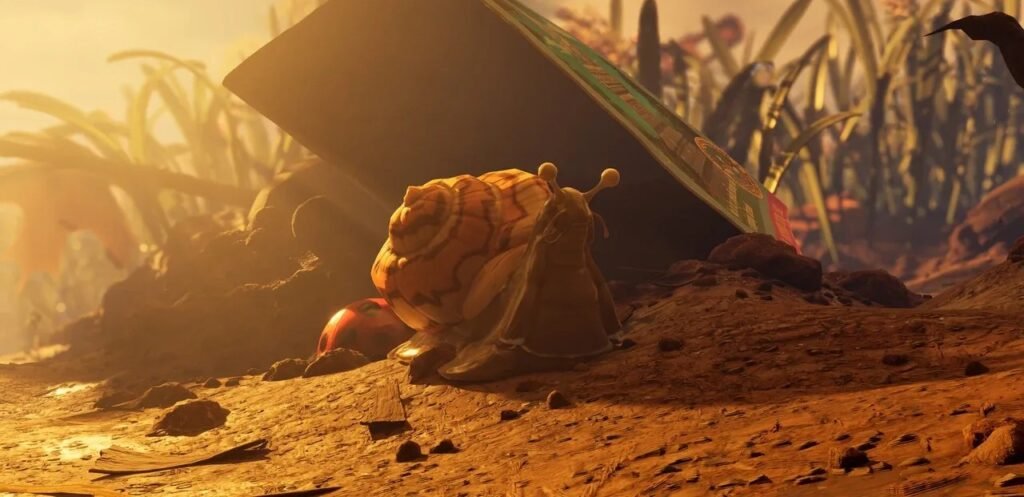
Stjärnljus created a Photoshop concept showing Lana and her small creature companion Mui standing in a green field beneath blue skies while a strange, spider-like robot watched them from a distance.
The image captured the visual identity the team wanted to create. Its influences included Another World, Limbo, Inside and Oddworld, as well as Studio Ghibli films such as Spirited Away, Ponyo and My Neighbour Totoro.
It was also enough to attract the attention of composer Takeshi Furukawa, known for his work on The Last Guardian. He eventually joined the project to create its soundtrack.
The image generated attention online, but publishers needed more than a compelling concept.
"The vision was good, but what they saw was we didn't have a realistic plan," Stjärnljus said.
The team's original schedule was far too optimistic, and its only playable material showed Lana moving back and forth.
Eventually, Stjärnljus and the team reached a difficult point.
"Should we just scrap this now?" became a real question.
Their savings were already gone, but Stjärnljus decided the answer was not to quit. Instead, he formed Wishfully Studios and brought more people into the project.
The early employees were not paid, but they received a stake in the company.
Eriksson says it was Stjärnljus's determination, combined with that original concept image, that convinced him to join.
"I could just tell that you guys were so serious about it from the beginning," he said.
This time, the team changed its approach. Rather than attempting to build the entire game, it spent a year creating a proper vertical slice.
That version was completed in early 2020 and caught the attention of Xbox.
"We got an exclusivity deal with them," Stjärnljus said. "That gave us a bit of money so we could hire some more people."
The deal was a major turning point.
Stjärnljus believes some people at Xbox simply fell in love with the project and decided to take a chance on a team that was still relatively inexperienced.
"They probably had meetings saying, 'Wait a minute, these guys are quite inexperienced, will they really pull this off?'" he said.
"That's a leap of faith."
The Xbox deal opened the door to more conversations with publishers. Around eight months later, Wishfully signed with Thunderful.
A little more than two years after that, Planet of Lana finally launched.
Hard-earned successPlanet of Lana was met with strong reviews when it released in 2023.Edge awarded the game a 9/10, although its print schedule created an unusual situation around the review embargo.
Because Edge is a physical magazine, the review appeared online earlier than the publisher expected.
"It was kind of funny," Stjärnljus recalled.
The game's success eventually led to more opportunities. A sequel arrived in 2025, while the original was also released on Nintendo Switch and PlayStation.
Planet of Lana also received a premium mobile version, which Stjärnljus says has been well received."It's a really good port," he said. "It plays really well, and we're getting really, really good reviews."
The studio now wants to continue expanding the Planet of Lana universe, and that could take the series somewhere far beyond games.
A film adaptation is currently being pitched to studios and streaming services by Story Kitchen, the company behind projects including the Sonic the Hedgehog films and the Tomb Raider television series.
Amber Midthunder is attached to star, while Pixar veteran Angus MacLane is also involved.
The relationship began after the first game launched, when Story Kitchen's Dmitri M. Johnson contacted Stjärnljus through X.
"They're super excited and have been from the start," Stjärnljus said.
The developers believe the project is in good hands, although Stjärnljus admits that there is still no guarantee about what the finished film will become.
"You never know, of course, what it becomes in the end," he said. "But so far it's been a great collaboration."
For Eriksson, the possibility of returning to film through Planet of Lana is an unexpected way to complete a circle that began with advertising.
He has also found the games industry surprisingly different from the film world he came from."I really love how unpretentious it is, coming from film," he said.
He describes the film industry as highly driven by individual creators and status, while game development is necessarily collaborative.
"The community between indie studios is really, really nice," Stjärnljus added.
When he first entered games, he expected other developers might dismiss him because of his lack of experience. Instead, he found an industry where people were generally willing to help each other.
Almost a decade after taking the risk, Wishfully now has two successful Planet of Lana releases behind it, a growing universe and a potential Hollywood adaptation in development.
The journey began with a single concept image, years of unpaid work and hundreds of publishers saying no.
After nine years, Stjärnljus can finally laugh about how little the team knew when it started."Now I think we can say that we are experienced."
The 2023 platformer from Swedish developer Wishfully Studios went against much of the conventional advice given to new studios. Rather than starting with a small project, the team spent six years developing a cinematic adventure game in one of the industry's most crowded genres.
The studio also had very little experience making games when it began pitching the project. Its first demo was far from what publishers would normally expect. It essentially showed the main character walking back and forth.
"It felt sluggish," Wishfully co-head and creative director Adam Stjärnljus explained during a talk at Nordic Game in May. The team also had what he described as an unrealistic production plan.
"We were basically slaughtered by publishers," he said.
Game director and writer Klas Martin Eriksson was even more blunt about the team's early efforts.
"We had no idea what we were doing," he said. "We were just like, 'Look, she's moving'."
The team went on to make hundreds of pitches and receive hundreds of rejections. Some were polite, while others were considerably harsher.
"It was really, really hard. It sucks to be told no," Stjärnljus said.
But the team kept going. Eventually, it only took one publisher to say yes.
That breakthrough came after three years of working without salaries.
Time for something completely different
"But if we hadn't been naive, then we wouldn't be here now," he said. "So it's a mix of stupidity and just trying to build something you care about, I guess."
Stjärnljus originally came from film and advertising. Alongside Eriksson and lead game designer Dan Faxe, he ran Makers Only, a Stockholm-based production company that created corporate films and animated commercials.
Eriksson had always wanted to make feature films, but commercials offered a practical way to earn money while working in production.
For Stjärnljus, however, advertising gradually became less fulfilling.
"When you had a commercial on TV, it was huge," he recalled. "But then as the years passed, it was more and more a job to pay the rent."
Eriksson reached a similar point while working on an advertising shoot in the Philippines.
He had the opportunity to travel, work on a large production and lead a team, but eventually questioned whether all that effort was being spent on something he actually cared about.
"I was shooting something in the Philippines and I was just like, oh my God, this is so amazing," he said. "But then at the end of the day, it was an ad for a denture adhesive."
His conclusion was simple. If he was going to burn out, he wanted to do it working on something he believed in.
For Stjärnljus, the answer was games.
He believed the skills he had developed through animation and filmmaking could translate into game development. In his early thirties, shortly after the birth of his second child, he decided to take the risk.
The problem was that Planet of Lana initially had no funding.
For three years, Stjärnljus worked without a salary. Living in Sweden helped make that possible, along with support from his family and the country's social safety net.
A Swedish game accelerator also provided funding that allowed the team to attend conferences and pitch the project to publishers, although it did not finance the game's development itself.
Stjärnljus was prepared to finish the game alone if necessary, but quickly realised that Planet of Lana would need a larger team.
He and his wife invested their savings, around €20,000, to hire a freelance animator and a part-time programmer.
The starting point
Before Planet of Lana became a game, it was a single image.
Stjärnljus created a Photoshop concept showing Lana and her small creature companion Mui standing in a green field beneath blue skies while a strange, spider-like robot watched them from a distance.
The image captured the visual identity the team wanted to create. Its influences included Another World, Limbo, Inside and Oddworld, as well as Studio Ghibli films such as Spirited Away, Ponyo and My Neighbour Totoro.
It was also enough to attract the attention of composer Takeshi Furukawa, known for his work on The Last Guardian. He eventually joined the project to create its soundtrack.
The image generated attention online, but publishers needed more than a compelling concept.
"The vision was good, but what they saw was we didn't have a realistic plan," Stjärnljus said.
The team's original schedule was far too optimistic, and its only playable material showed Lana moving back and forth.
Eventually, Stjärnljus and the team reached a difficult point.
"Should we just scrap this now?" became a real question.
Their savings were already gone, but Stjärnljus decided the answer was not to quit. Instead, he formed Wishfully Studios and brought more people into the project.
The early employees were not paid, but they received a stake in the company.
Eriksson says it was Stjärnljus's determination, combined with that original concept image, that convinced him to join.
"I could just tell that you guys were so serious about it from the beginning," he said.
This time, the team changed its approach. Rather than attempting to build the entire game, it spent a year creating a proper vertical slice.
That version was completed in early 2020 and caught the attention of Xbox.
"We got an exclusivity deal with them," Stjärnljus said. "That gave us a bit of money so we could hire some more people."
The deal was a major turning point.
Stjärnljus believes some people at Xbox simply fell in love with the project and decided to take a chance on a team that was still relatively inexperienced.
"They probably had meetings saying, 'Wait a minute, these guys are quite inexperienced, will they really pull this off?'" he said.
"That's a leap of faith."
The Xbox deal opened the door to more conversations with publishers. Around eight months later, Wishfully signed with Thunderful.
A little more than two years after that, Planet of Lana finally launched.
Hard-earned successPlanet of Lana was met with strong reviews when it released in 2023.Edge awarded the game a 9/10, although its print schedule created an unusual situation around the review embargo.
Because Edge is a physical magazine, the review appeared online earlier than the publisher expected.
"It was kind of funny," Stjärnljus recalled.
The game's success eventually led to more opportunities. A sequel arrived in 2025, while the original was also released on Nintendo Switch and PlayStation.
Planet of Lana also received a premium mobile version, which Stjärnljus says has been well received."It's a really good port," he said. "It plays really well, and we're getting really, really good reviews."
The studio now wants to continue expanding the Planet of Lana universe, and that could take the series somewhere far beyond games.
A film adaptation is currently being pitched to studios and streaming services by Story Kitchen, the company behind projects including the Sonic the Hedgehog films and the Tomb Raider television series.
Amber Midthunder is attached to star, while Pixar veteran Angus MacLane is also involved.
The relationship began after the first game launched, when Story Kitchen's Dmitri M. Johnson contacted Stjärnljus through X.
"They're super excited and have been from the start," Stjärnljus said.
The developers believe the project is in good hands, although Stjärnljus admits that there is still no guarantee about what the finished film will become.
"You never know, of course, what it becomes in the end," he said. "But so far it's been a great collaboration."
For Eriksson, the possibility of returning to film through Planet of Lana is an unexpected way to complete a circle that began with advertising.
He has also found the games industry surprisingly different from the film world he came from."I really love how unpretentious it is, coming from film," he said.
He describes the film industry as highly driven by individual creators and status, while game development is necessarily collaborative.
"The community between indie studios is really, really nice," Stjärnljus added.
When he first entered games, he expected other developers might dismiss him because of his lack of experience. Instead, he found an industry where people were generally willing to help each other.
Almost a decade after taking the risk, Wishfully now has two successful Planet of Lana releases behind it, a growing universe and a potential Hollywood adaptation in development.
The journey began with a single concept image, years of unpaid work and hundreds of publishers saying no.
After nine years, Stjärnljus can finally laugh about how little the team knew when it started."Now I think we can say that we are experienced."
Cover Image
Pexels
Sources
Related Content
Recent News

HELP US BUILD GAMYVERSE
Your feedback, ideas, and passion create what we build next. Join the community and grow with us.
Help Create Gamyverse
Comments:
0
Sort by:
Newest