





The Witcher 3 Developer Reveals How Tiny Details Nearly Broke Its Immersion!
CD Projekt Red learned that creating a believable RPG world isn't just about adding more detail, but making sure every part of it reacts convincingly to the player.
AI-Assisted: This article was created with the assistance of artificial intelligence and reviewed by human editors.
It might seem strange to worry about whether a fantasy RPG has too much detail, especially in the post-Red Dead Redemption 2 era of absurdly specific horse animations. However, there is a difficult balance between making a world feel alive and spending enormous amounts of development time on details that players may never notice. For CD Projekt Red, that balance became particularly important during the development of The Witcher 3.
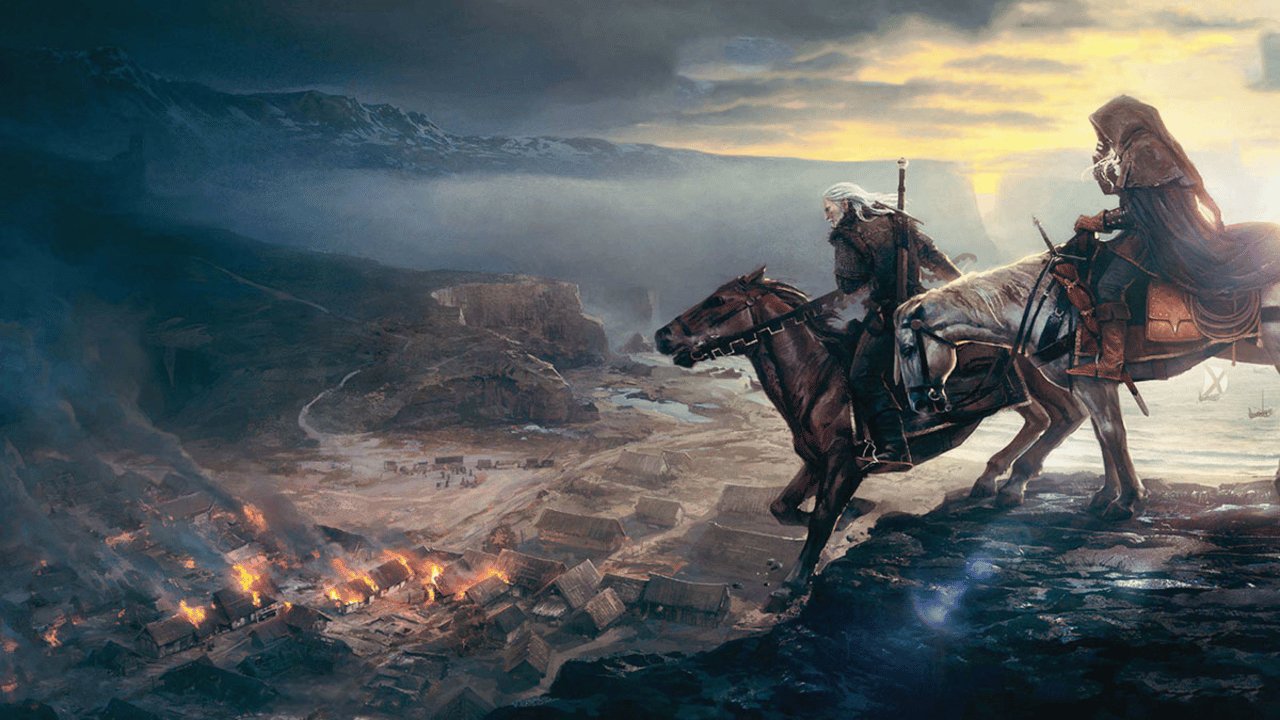
The Witcher 3 is filled with bustling villages, busy taverns, dangerous dungeons, and countless NPCs designed to make its world feel believable. However, players naturally want to look behind the curtain and see how these systems work. According to CD Projekt Red's Philipp Weber, that curiosity created some unexpected problems during development.
"If a village only has eight houses, people will want to see if the people truly exist in the world or if it's just fakery," Weber told Edge Magazine. "Lots of people nowadays are interested in those kinds of details, and it really came to haunt us."
Weber explained that CD Projekt Red eventually became much better at creating detailed environments. If he were asked to create a Witcher 3-style village with eight houses today, he believes he could build it in around two hours. The difficult part, however, was making sure the inhabitants of those villages reacted properly to everything the player did.
One particularly memorable example involved NPCs reacting to combat in the middle of towns. When the player began attacking or performing combat moves, NPCs were programmed to drop whatever they were carrying and run away. The system generally worked as intended, except when the NPC happened to be a mother holding a baby."For a few weeks, women were just dropping their babies, left and right."
The problem highlights how difficult it can be to create believable worlds through interconnected systems. An NPC may have a perfectly reasonable response to danger, but that response can quickly become absurd when combined with another system the developers hadn't accounted for.
Another important part of making NPCs feel alive is ensuring they don't constantly follow the same predictable routines. Rather than giving every character a predetermined route, CD Projekt Red created multiple points of interest and allowed NPCs to determine their own paths between them.
"We don't give them specific paths," Weber explained. "We give them spots of interest that are available and then they're the ones doing the pathfinding ... for the 50 sailors at Novigrad harbour, for example, we made 200 possible spots, so even if all 50 were active at the same time, they would have options."
That approach gives NPCs enough freedom to behave differently from one another, making the world feel less like a collection of characters following identical scripts. It's also an example of how a relatively simple system can create the impression of a much more complex world.
Cyberpunk 2077 would later demonstrate how effective that philosophy could become. CD Projekt Red's futuristic RPG features countless detailed NPCs throughout Night City, with many of them given distinctive appearances, behaviors, and handcrafted moments that help make the enormous city feel populated rather than simply filled with background characters.
However, systems-driven simulation isn't the only ingredient required to make believable NPCs. CD Projekt Red has previously discussed the limitations of using generative AI for characters, with the studio noting that the quality difference between manually created NPCs and AI-generated alternatives remains substantial.
For CD Projekt Red, that gap has previously been described as "like a canyon." The Witcher 3's development shows why. Creating a convincing world isn't necessarily about giving every character an endless number of behaviors. It's about making sure the systems underneath those characters work together well enough that players don't notice the seams.
The Witcher 3 is filled with bustling villages, busy taverns, dangerous dungeons, and countless NPCs designed to make its world feel believable. However, players naturally want to look behind the curtain and see how these systems work. According to CD Projekt Red's Philipp Weber, that curiosity created some unexpected problems during development.
"If a village only has eight houses, people will want to see if the people truly exist in the world or if it's just fakery," Weber told Edge Magazine. "Lots of people nowadays are interested in those kinds of details, and it really came to haunt us."
Weber explained that CD Projekt Red eventually became much better at creating detailed environments. If he were asked to create a Witcher 3-style village with eight houses today, he believes he could build it in around two hours. The difficult part, however, was making sure the inhabitants of those villages reacted properly to everything the player did.
One particularly memorable example involved NPCs reacting to combat in the middle of towns. When the player began attacking or performing combat moves, NPCs were programmed to drop whatever they were carrying and run away. The system generally worked as intended, except when the NPC happened to be a mother holding a baby."For a few weeks, women were just dropping their babies, left and right."
The problem highlights how difficult it can be to create believable worlds through interconnected systems. An NPC may have a perfectly reasonable response to danger, but that response can quickly become absurd when combined with another system the developers hadn't accounted for.
Another important part of making NPCs feel alive is ensuring they don't constantly follow the same predictable routines. Rather than giving every character a predetermined route, CD Projekt Red created multiple points of interest and allowed NPCs to determine their own paths between them.
"We don't give them specific paths," Weber explained. "We give them spots of interest that are available and then they're the ones doing the pathfinding ... for the 50 sailors at Novigrad harbour, for example, we made 200 possible spots, so even if all 50 were active at the same time, they would have options."
That approach gives NPCs enough freedom to behave differently from one another, making the world feel less like a collection of characters following identical scripts. It's also an example of how a relatively simple system can create the impression of a much more complex world.
Cyberpunk 2077 would later demonstrate how effective that philosophy could become. CD Projekt Red's futuristic RPG features countless detailed NPCs throughout Night City, with many of them given distinctive appearances, behaviors, and handcrafted moments that help make the enormous city feel populated rather than simply filled with background characters.
However, systems-driven simulation isn't the only ingredient required to make believable NPCs. CD Projekt Red has previously discussed the limitations of using generative AI for characters, with the studio noting that the quality difference between manually created NPCs and AI-generated alternatives remains substantial.
For CD Projekt Red, that gap has previously been described as "like a canyon." The Witcher 3's development shows why. Creating a convincing world isn't necessarily about giving every character an endless number of behaviors. It's about making sure the systems underneath those characters work together well enough that players don't notice the seams.
Cover Image
CD Projekt Red
Sources
Related Content

Recent News

HELP US BUILD GAMYVERSE
Your feedback, ideas, and passion create what we build next. Join the community and grow with us.
Help Create Gamyverse
Comments:
0
Sort by:
Newest