YOU SKIPPED THE CREDITS, HERE IS WHAT YOU IGNORED
Press Start to Appreciate

Created by
Tarik and Yato
Date: 30/06/2026

Let us pause and be real here for a second. You have rage-quit a game, broken your only controller, and moved on with your life as if nothing had happened, yet you never once stopped to wonder how that game got there
in the first place. And honestly, fair enough, but here is a number that will get you to pause and think. Red Dead Redemption 2 took more than EIGHT years and over 2,000 PEOPLE to build! You heard me, eight.
That’s longer than most marriages these days. So this might get you wondering,
could you, by yourself, manage to build
a game that is actually relatively playable?Short answer, YESS! So let us see how.




You have played it. But did you ever wonder if you could build it?

“A delayed game is eventually good,
but a rushed game is forever bad.”
– Shigeru Miyamoto
If you are like me, games have always been more than just a form of entertainment. They have been a unique source of wonder and ambition. For me, that ambition turned into something bigger than just gaming.
It started just like how anything in my life starts, by saying to myself, “What if I just … made one?”
So after watching a YouTube video to hype myself up, I downloaded the Unity game engine, one of the worst engines of today. Cause honestly, it is not doing well these days, but I digress. So, armed with Unity
and way too much confidence, I started on my very first game development project.
It was a simple 2D space shooter. It had all a shooter like that needed: a wonky ship, some rocks, and some floating coins as collectables, and I cannot forget the static PNG as the background. It was my baby,
a rough-around-the-edges baby.
And most importantly of all, it was playable goddamit. Having something I built come to life like that is honestly a feeling I cannot forget.

My second dip
Unfortunately, I rode that high for a while, but I could do better. I hopped back on Unity and started a new, mentally hard adventure.
I had the bright idea to make a cute 2D platformer.
One thing I neglected to mention is that I had little to no knowledge of coding back then. And the reason the first game even became a game was because I “borrowed” some scripts to run the controls, which,
relatively speaking,
weren’t complicated at all. Again, I just had zero knowledge. And that act of “borrowing” did not end with my previous shooter game, especially now that I had to think about a player jumping and getting damaged.
When I say it was just me watching YouTube videos and trying to understand what on earth this language is for 4 straight hours
a day, I am not exaggerating. One thing I recommend for the curious minds out there is not to start your coding journey with C#,
it is not worth it. I started balding at the ripe age of 18. With all that said, it was a grueling journey, but it came to a testful resolution. With the help of a course I enrolled in,
I managed to
make one of the most polished games I could ever make back then. It was a game I was genuinely proud of. I named it Invasion, very creative, I know.




A devastating pause
And as things go in life, my journey paused, but my passion for the industry never really died away. And looking back to those games I made 5 years ago now, I realized that they have taught me something that years of
playing never could. The process of making a game is an incredibly humbling experience, yet you see indie developers creating masterpieces by themselves, at scales that are almost impossible to wrap your head
around. And that is what this article is about. Not just the games we play and love, but
the process, the people, and the time and passion that bring them to life

The formula for greatness
Here is the thing about video games in our modern era, the successful ones at least, that most people never really think about. They do not just appear from thin air for you to play. Behind every world you got lost in, every boss that abused you, and every
story that got you crying in the middle
of the night. A formula was followed,
a pipeline of stages, going all the way from an idea to a finished serviceable product.
So let us walk through these stages and explore their significance and how you
can apply them to your own projects,
starting with something as simple
as the spark of an idea.

Stage 1: Planning
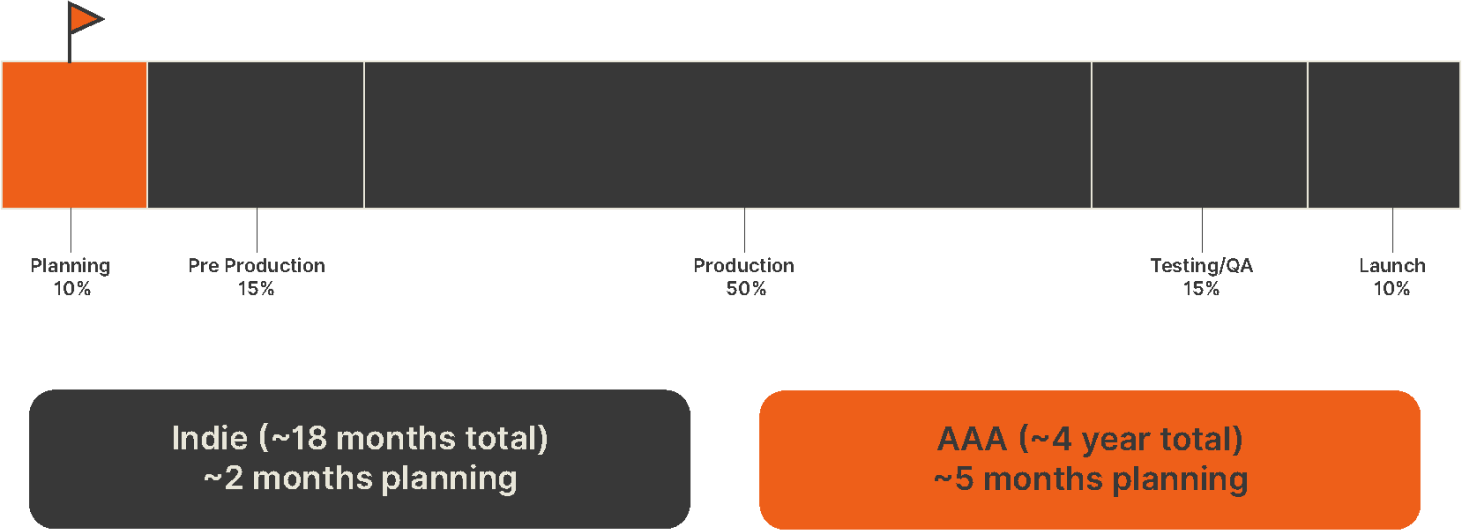
Every game that has ever been made starts the same way: with a question. A “what if” question. What if you played as an egg doing an obstacle course where you need to jump at great heights, but if you fall, the egg will crack? Real game btw. That is the planning stage, it is just pure imagination,
and the way I look at it is
how would you describe the game to some stranger in one sentence? It also answers other questions like what kind of game it is going to be, who it is for, what platform it will live on, and how you want the players to feel while playing it. This may sound simple,
but getting these answers wrong early
can drastically shift later production.
A single change to this early stage later on in production can add years and millions of dollars to the development of the game,
and no one wants that, so it is important to answer these questions clearly and identify the vision of the game early on to avoid unwanted losses.
Stage 2: Pre-production
Once you manage to lock in your chaotic yet wonderful ideas, it is time to start thinking about how you want to actually build them. This is the stage where your fantasies start becoming a reality, which also scares me, knowing what messed-up things people come up with, but that is beside the point.
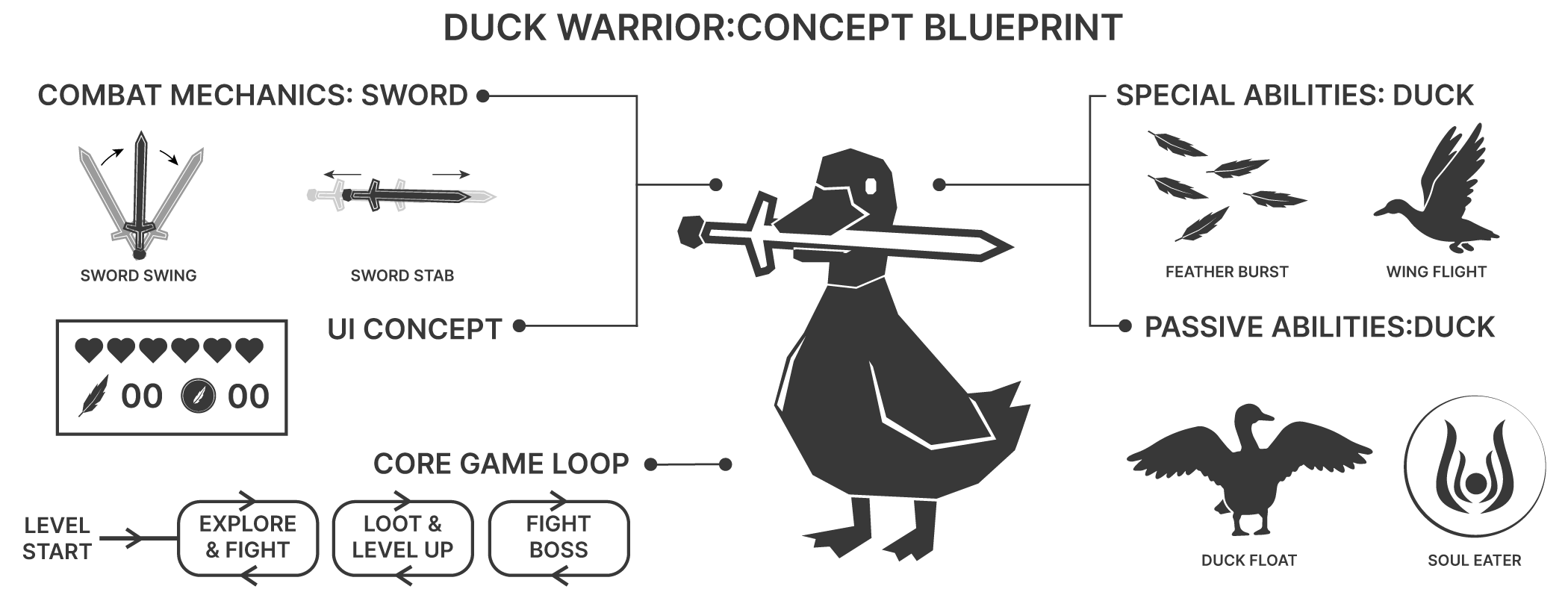
In this stage, the artists are experimenting with the visual style and colour palettes, creating the concept art we all know and
love. Developers are deciding on mechanics
and the game’s physics, especially the jiggly ones. And the sexiest of all is the engineers who are responsible for pushing the limits of technology of their time to its absolute limit. There are also writers who build the stories of the world and the characters.
But, eh, we do not care about them right now. And to make sure all these parts are working together as one body,
there are leads who make sure everyone is following the vision set out in the planning stage. Here is where the storyboards get created, game design documentation starts getting formulated, and prototypes give people the chance to taste what they have created without the seasoning.
Stage 3: Production
This is the seasoning stage, where all the flavours get added. And flavours take time to develop, so that’s why this is also considered the longest stage of game development, and it is where every single department is running at full speed all together. It is an amalgamation of efforts from developers who are coding
an entire world. Artists who are designing and animating characters. Voice actors shouting their lungs out over and over again till they get it right, too many different departments getting their ducks in a row, creating organised chaos, building up to the testing stage. But it is also where
the most heartbreaks happen, ideas that sounded really good on paper just do not make it because of how much effort it would take to build, or it just does not fit the story anymore, and it is very sad cause this is the stage where creativity meets reality, and reality is a bitch.


Stage 4: Testing / QA
Every game that has ever been made starts the same way: with a question. Usually a “what if” question. What if you played as an egg doing an obstacle course where you need to jump at great heights and try not to fall, or else the egg will crack? Real game btw. That is the planning stage, it is just pure imagination, and the way I look at it is how
would you describe the game to a stranger in a single sentence. It also answers other questions like what kind of game it is going to be, who it is for, what platform it will live on, and how you want the players to feel while playing it. This may sound simple, but getting these answers wrong early can drastically shift later production.
A single change to this early stage, later on in production, can add years and millions of dollars to the development of the game, and no one wants that, so it is important to answer these questions clearly and identify the vision of the game early on to avoid unwanted losses.
Stage 5: Pre- Launch
Every game that has ever been made starts the same way: with a question. Usually a “what if” question. What if you played as an egg doing an obstacle course where you need to jump at great heights and try not to fall, or else the egg will crack? Real game btw. That is the planning stage, it is just pure imagination, and the way I look at it is how
would you describe the game to a stranger in a single sentence. It also answers other questions like what kind of game it is going to be, who it is for, what platform it will live on, and how you want the players to feel while playing it. This may sound simple, but getting these answers wrong early can drastically shift later production.

Stage 6: Launch
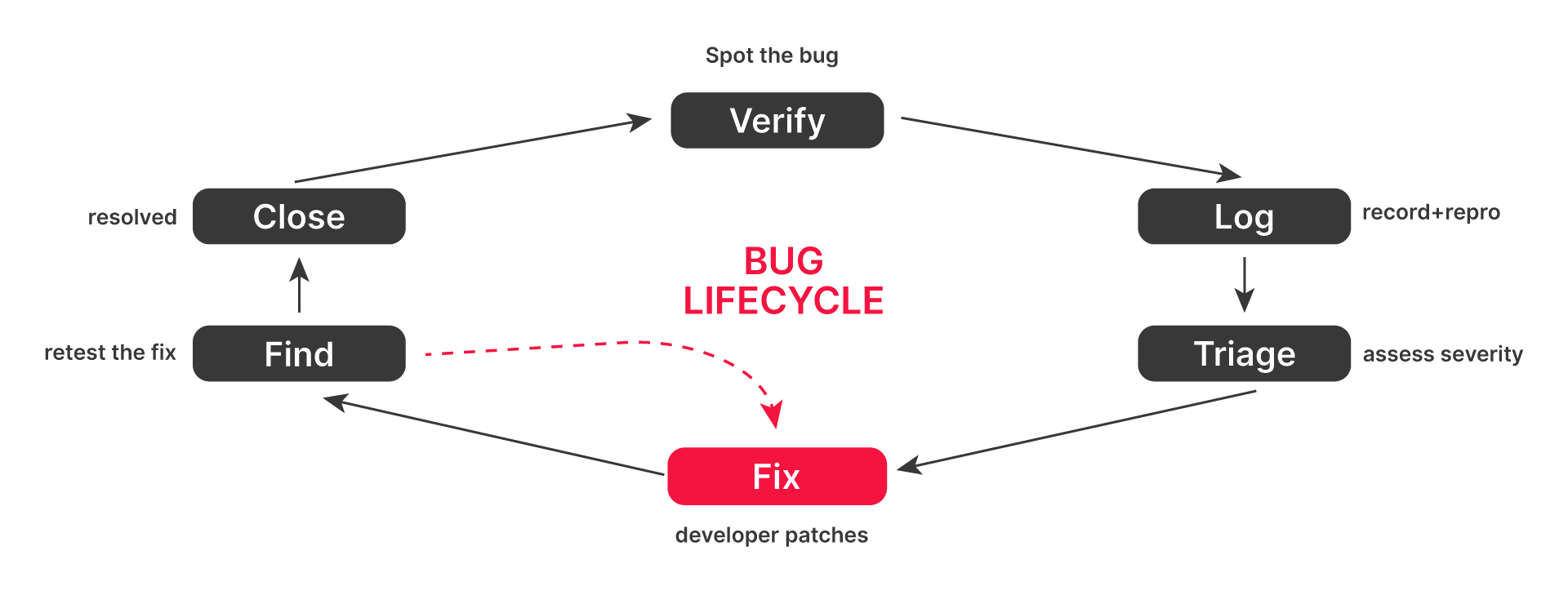
This is it. The stage we have all been waiting for. The finish line. But this does not mean your work here is done; there is still a lot of work to do. At this stage, everyone goes through the game one final time before it gets released, fixing every bug visible, from
game-breaking crashes to minor cosmetic issues. Other than bug fixing, the last touches are added artistically and gameplay-wise. And in some cases, things that completely turn the game around are added at the last minute.

Stage 7: post Launch
This is it. The stage we have all been waiting for. The finish line. But this does not mean your work here is done; there is still a lot of work to do. At this stage, everyone goes through the game one final time before it gets released, fixing every bug visible, from
game-breaking crashes to minor cosmetic issues. Other than bug fixing, the last touches are added artistically and gameplay-wise. And in some cases, things that completely turn the game around are added at the last minute.




Next time you press start, remember this
And as things go in life, my journey eventually paused, but my passion for the industry never really went away. And looking back to those games I made 5 years ago now, I realized that they have taught me
something that years of playing never could. The process of making a game is an incredibly humbling experience, yet you see indie developers creating masterpieces all by themselves, at scales that are almost
impossible to wrap your head around. And that is what this article is about. Not just the games we play and love, but the process, the people, and the time and passion that bring them to life
Wanna see what’s inside my head?


If this article managed to excite you about creating your own game, remember that every game started as just an idea in someone’s head. Yours is no different.

Click Here