THE ARCHITECTOF PCGAMING
We have many influential and praised figures in the gaming world. One of the most iconic
is definitely Gabe Newell. As the co-founder and president of Valve, Gabe is recognized
for changing the way gamers play, develop, and distribute games worldwide.
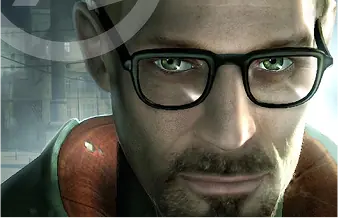
He is the shaper of great successes such as
the Half-Life series, Portal, and Left 4 Dead.
He has reinvented the digital gaming world with the launch of Steam. As a technology enthusiast, Gabe’s vision has transformed
the gaming landscape we know today.

He is actively committed to innovation that spans beyond entertainment. There is no
doubt that Gabe is a legend for all gamers.
Join us in discovering and learning about
his journey and the huge asset he remains
to the industry.
Writer: Bambie
Designer: Myra
Date: 30/10/2025
Time to read: 15 mins
Gabe Newell: The talented Harvard dropout
You probably expect this article to be about Gabe’s biggest games and how they were created, but we heard those stories many
times before. Instead, we will mainly focus
on a perspective that highlights his vision
for gaming and technology.


At Microsoft, Gabe was part of the team that was working on the first Windows systems,
and he was an influence in the development
of them. In the mid-90s, we were witnesses
to one of the first successes that came with
the release of Windows 95.

Back in 1980, when technology was already rapidly developing, Gabe entered Harvard University to study computer science.
No more than 3 years later, he was recruited
by Steve Ballmer, an executive of Microsoft
who was also an ex-Harvard alumnus to join
him as a programmer. Despite the uncertainty of how this would unfold, Newell decided to show resilience and accepted the offer.
According to Gabe, this was one of the best decisions he ever made, as it was the start of the journey that led to the founding of Valve.
A vision that Doominated PC gaming

In the early nineties, MS-DOS was the primary operating system for PCs. Gabe realized that Doom, a shooter game he was quite fond of,
and the newly released Windows 95 system,
as a great opportunity to have a PC based platform for gamers. With this in his mind,
he decided to lead the development of a port of Doom for the upcoming Windows release.
Gabe and his team worked on new libraries that allowed developers to achieve better performance and graphics on the platform.
Some of these libraries later DirectX.

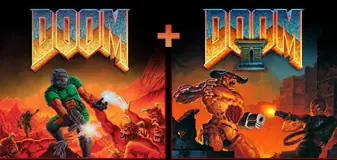
With the launch of Win95, Doom was ported successfully. This event boosted Microsoft to position Windows as the go-to platform for developers, and by the end of the decade,
it was the default operating system for any type of PC gaming.
This was the first time Gabe’s name made it into history, and we know today that he was later appointed as the father of modern PC gaming due to this incredible contribution.
From here on, Gabe would only accomplish memorable things.
Is trusting your gut worth the risk?
Despite the uncertainty, he trusted his instinct. Even though he was highly inspired by Doom, he didn’t want his first release to be a generic arena shooter. Instead, he wanted a dynamic
shooter. One that could introduce storytelling without feeling forced to users. His goal was
for people to experience a whole story from beginning to end, but he knew that gamers
also loved running around and fragging with their friends. This was the kickstart point for Valve’s first memorable game.

After Doom’s port success, Gabe predicted that gaming was going to be an enormous market. With that in mind, he decided to leave his job at Microsoft and, together with his friend Mike Harrington, also an ex-Microsoft employee, founded their own gaming studio in 1996.
This was the birth of Valve. Gabe and Mike did not have any investors. They used the money they made at Microsoft to fund the company themselves. Something they had to deal with.
Gabe had a vision: to make story-driven PC games that were accessible to players.
He was aware that this was not the rational decision, but rather a gamble for the entire company. He could have taken the easier
path and made more ports for popular
games like Wolfenstein or Quake.
Valve’s leap of faith!
The final product of Gabe’s vision was Half-Life. To make the game, the company had to license Quake’s engine and modify it to create its very own. The name of this new engine was Gold Source, or simply GoldSrc.
GoldSrc allowed more advanced features that focused on realistic environments.


By the time HL got released, PC gaming was already a thriving market, mostly in genres
like shooters, real-time strategy, and RPGs.
However, no game had managed to merge storytelling with immersion and action as seamlessly as Valve’s debut title.
The engine also made possible certain scripted sequences that would increase user immersion as we reached a more balanced blend between action and narrative.
The development was a challenging two-year run, in which multiple redesigns were made before Half-Life’s launch. The game was finally released in 1998, and it received praise from
critics due to its atmosphere and AI integration. The success of Half-Life showcased how video games can be deeper, being almost or perhaps equal to cinematic expiriences.
The idea that molded the future of gaming

After the success of Half-Life, Gabe started to think about what the next chapter for Valve would be. He was a witness to the potential
of people when it came to mod production
for Half-Life. Another potential showcased
by new-generation developers was in new
games like Counter-Strike, a game he later got the rights to. Then it was clear to him that PC gaming had 2 issues: distribution and cheating.
We also have to remember that the internet was not yet accessible to wider audiences.
Having internet at home was quite exclusive.
By this time, most things were shared on disks and CDs. Gamers would gather at LAN parties to exchange different kinds of files and check out mods of their own.
Overall, updating the game content was not the easiest for the community, nor for rookie developers who had ideas they wanted to
test and implement.
Gabe was thinking of how to solve automatic downloads as well as updates. This turned out to be the beginning of the next big thing for Valve, a centralized platform for games.
One platform to rule them all!

With the idea of solving the main issues of PC gaming, Gabe begun the developing of Steam.
This was a software that pushed updates for everyone and provided a solid platform for
modders to distribute their own creations.
We mentioned that the internet was not
a big thing back then, so how did Gabe
foresee that it would have the impact it
eventually had? He simply had a vision where games could be distributed online instead of
physically. He saw Steam as the ultimate tool
to achieve this goal.
Released in 2003, the Steam launch also brought another indispensable system, Valve’s anti-cheat. This system could automatically identify and ban cheaters with no human input. The problem was that Steam had not yet been widely used,
as the internet access was still quite a new thing. However, steam proved to be a game-changer, literally. Today, we know that this platform is as essential as having a browser on your computer.
It dominates the PC gaming market,
with over 40 million concurrent users recorded in March 2025, serving as the foundation for most modern digital gaming ecosystems. Every PC user is more than familiar with Steam, even if they are not mainstream gamers.
Half the life, double the risk!
With the success of Half-Life 1, Gabe started to think about the sequel. However, this game is about to put Valve in a very difficult position.
Gaben, a nickname that Newell adopted when
the community found out his Microsoft email address, took another huge gamble.
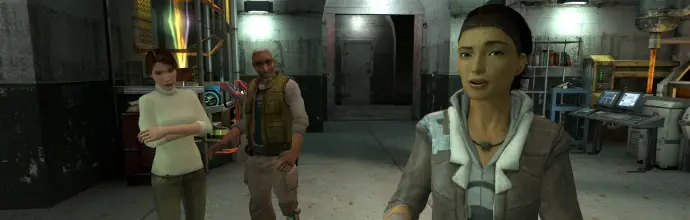

It introduced groundbreaking physics-based gameplay, quite realistic facial animations,
and immersive storytelling without those traditional cutscenes.
Half-Life 2 earned over 35 Game of the Year Awards, and it placed Gabe once again at
the peak of the industry.
He decided to make Half-Life 2 accessible only through Steam platform. People could still get the physical version, but to play it, you had to activate it on Steam via a CD key.
Gamers were not particularly happy about this, but they still managed to get internet access to play his new game. The community had to go through several layers of hell to eventually
activate their games. Despite all this hassle, Half-Life 2 was a massive success. It was too
big a game not to check out. The title was
universally recognized and praised.
This is Gabe’s playground!


Everything shows that his next move might be immersive content. As we reflect on his legacy, one thing is clear: Gabe is not just influencing the present of gaming, but he is digging into how we can change the way we play, interact, and experience digital worlds.
Gabe is a pioneering innovator. He has been in the industry for a long time. His career is full of massive successes. Among the ones we did not mention, we have Team Fortress 2 with a 2010 update that implemented the first real online trading and microtransaction system.
Huge titles such as Portal 1 and 2, Left 4 Dead series, and Dota 2. He pushed the boundaries of virtual reality gaming with the Valve Index headset and Half-Life: Alyx. He is also a huge influence in Esports, and despite everything
he contributed to the industry, his real focus
and ambition is in creating platforms for others to develop their own content. We see it in front of us with Steam, Steam Deck, and Valve Index, platforms that foster ecosystems rather than specific single products. Gabe is planning for the future of entertainment itself.